Panasonic AK-UC3300GSJ Camera Head (Lemo)
27.090,40 €
Alle Preise exklusiv MwSt.
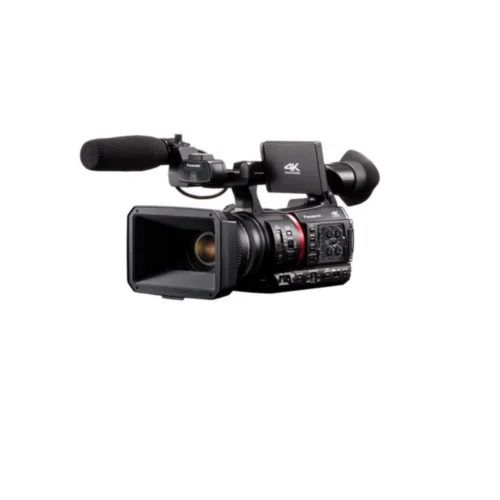
Die Panasonic AK‑UC3300GSJ ist eine professionelle 4K‑Studio‑Kamera mit großem 11,14‑Megapixel‑Bildsensor (Super35) und einer effektiven Auflösung von bis zu 2.000 TV‑Linien – ideal für hochwertige Broadcast‑Produktionen. Gleichzeitig bietet sie HDR‑Unterstützung und einen erweiterten Farbraum (ITU‑R BT.2020) sowie einen HD‑High‑Speed‑Modus mit bis zu 2×‑Geschwindigkeit für dynamische Live‑Events.
| Hersteller | PANASONIC |
|---|
Vollständige Artikelbeschreibung
- Sensor: 11,14 Megapixel MOS-Sensor :contentReference[oaicite:1]{index=1}
- Empfindlichkeit:
- High Sens: F10 (59,94 Hz) / F11 (50 Hz) bei 2.000 lx :contentReference[oaicite:2]{index=2}
- Normal: F6 (59,94 Hz) / F7 (50 Hz) bei 2.000 lx :contentReference[oaicite:3]{index=3}
- S/N-Verhältnis: 62 dB oder mehr :contentReference[oaicite:4]{index=4}
- Horizontale Auflösung: ca. 2.000 TV‑Linien (4K) / ≥ 1.000 TV‑Linien (HD) :contentReference[oaicite:5]{index=5}
- ND-Filter: Klar, 1/4, 1/16, 1/64 :contentReference[oaicite:6]{index=6}
- Verschlusszeiten:
- 59,94i / 59,94p: 1/100 – 1/2000 Sek. :contentReference[oaicite:7]{index=7}
- 29,97p: 1/48, 1/50, 1/60, 1/96, 1/100, 1/120, 1/125, 1/250, 1/500, 1/1000, 1/1500, 1/2000 :contentReference[oaicite:8]{index=8}
- 23,98p: 1/48, 1/50, 1/60, 1/96, 1/100, … bis 1/2000 Sek. :contentReference[oaicite:9]{index=9}
- Bildformate / Frameraten:
- 4K / UHD: 3840 × 2160 bei 59,94p, 50p, 29,97p, 25p, 23,98p :contentReference[oaicite:10]{index=10}
- HD: 1080p (59,94, 50), 1080i (59,94, 50), 1080PsF, 720p (59,94, 50) :contentReference[oaicite:11]{index=11}
- HD Hi-Speed (bei kompatibler CCU): z. B. 1080/59,94p bis 120 fps, 1080/50p bis 100 fps, 720/59,94p bis 120 fps :contentReference[oaicite:12]{index=12}
- Low‑Skew-Modus: Auslesen des Sensors mit 1/100 Sekunde, reduziert Schräglagen (Skew) bei schnellen Bewegungen :contentReference[oaicite:13]{index=13}
- Digital Extender (2×): Ermöglicht digitale Vergrößerung des Bildes durch Signalverarbeitung :contentReference[oaicite:14]{index=14}
- Flash‑Band-Korrektur: Hochpräzise Erkennung und Korrektur von Flash-Bändern :contentReference[oaicite:15]{index=15}
- Farbkorrektur:
- 12‑Pol-Farbkorrektur, lineare Matrix für Sättigung und Farbton :contentReference[oaicite:16]{index=16}
- Hauttönedetailkorrektur: drei separate Tonbereiche und selektierbare Farbphasen :contentReference[oaicite:17]{index=17}
- Gain-Verstellung: Sanfte Übergänge (Shockless Gain); Master-Gain in 0,1 dB-Schritten einstellbar :contentReference[oaicite:18]{index=18}
- Farbtemperatur: 2.000 K bis 15.000 K einstellbar, Anzeige & Anpassung möglich :contentReference[oaicite:19]{index=19}
- Linsendatei-Funktion: Speicherung von Flare- und Shading-Werten pro Objektiv :contentReference[oaicite:20]{index=20}
- User-Buttons: 4 am Kamerakopf + 4 am Sucher (AK-HVF100GJ) + 3 am kleineren Sucher (AK-HVF75GJ) :contentReference[oaicite:21]{index=21}
- Intercom: Zwei separate Intercom-Leitungen :contentReference[oaicite:22]{index=22}
- Steuerung: Unterstützung für IP-Steuerung :contentReference[oaicite:23]{index=23}
- Farbe / Dynamischer Bereich: HDR-Unterstützung (z. B. HLG) und erweiterter Farbraum (ITU‑R BT.2020) :contentReference[oaicite:24]{index=24}
- Gewicht (Kameragehäuse): ca. 4,3 kg :contentReference[oaicite:25]{index=25}
- Betriebstemperatur: –10 °C bis 45 °C :contentReference[oaicite:26]{index=26}
- Lagerungstemperatur: –20 °C bis 60 °C :contentReference[oaicite:27]{index=27}
- Gehäuse‑Anschlüsse:
- 2 × 3G‑SDI Ausgänge (BNC) :contentReference[oaicite:28]{index=28}
- 1 × LEMO Glasfaser‑Anschluss :contentReference[oaicite:29]{index=29}
- 1 × Ethernet (RJ‑45) :contentReference[oaicite:30]{index=30}
- Audio: 3 × XLR-Eingang (3‑polig) :contentReference[oaicite:31]{index=31}
- Genlock IN / Prompter OUT: BNC :contentReference[oaicite:32]{index=32}
- AUX (HD Trunk / Prompter): BNC :contentReference[oaicite:33]{index=33}
- Intercom: 2 × 5‑pol XLR :contentReference[oaicite:34]{index=34}
- Remote: 10‑pol Anschluss :contentReference[oaicite:35]{index=35}
- Return Control: 6‑pol Anschluss :contentReference[oaicite:36]{index=36}
- Trunk: 12‑pol Anschluss :contentReference[oaicite:37]{index=37}